The Conspiracies Surrounding the Assassination of MLK
An investigative academic paper dedicated to the critical analysis and educational dissemination of narratives surrounding the assassination of Dr. Martin Luther King Jr.

Dr. Martin Luther King Jr. is remembered by many traits and qualities but his intelligence will always stand out. Dr. King’s educational influence has inspired generations of educated young men and women. In his essay “The Purpose of Education” Dr. King makes the argument that education has both a moral and utilitarian function. He goes on to say, “Education must enable a man to become more efficient, to achieve with increasing facility the legitimate goals of his life.” He observed a misinterpretation of the uses of education, stating that too many college aged men see education as a means to exploitation. Even further, he says that intelligence itself is not enough and that “Intelligence plus character—that is the goal of true education.”. He ends the article with a warning to students and educators alike; to be careful in what direction colleges direct their students education.”. He ends the article with a warning to students and educators alike; to be careful in what direction colleges direct their students.
Martin Luther King Jr. was a courageous man. While most recognize him for his infamous “I Have a Dream” speech, his speech entitled “A Proper Sense of Priorities” shows this courageousness when he says, “I’m still convinced that the struggle for peace and the struggle for justice or the struggle for civil rights, we call it in America, can be tied together…And I feel the people who are working for civil rights should be working for peace and I feel that those who are working for peace should be working for civil rights and justice.” Merging these two issues together, especially at the time, was a very different approach to the narrative at the time as civil rights was regarded as a more Black issue while peace is a universal struggle. To get up in front of the world and fight for a better one takes a good amount of courage, and for Dr. Martin Luther King Jr., that was his life.
The pastor is regarded in American history as one of our brave, intelligent leaders that paved the way for many Americans of color to have the same opportunities as everyone else in the face of extreme adversity and violence. Specifically, adversity from his very own government he was appealing to. Which can also explain why many Americans feel as though the assassination of the prolific civil rights leader has a few too many questions that haven't been answered. While the case remains closed officially, many are beginning to look back at the finer details and voice those same questions from when the tragedy first took place.
Martin Luther King Jr. Who Was He?
The Assassination of Martin Luther King Jr.
On April 4, 1968, the assassination of Dr. Martin Luther King Jr. shocked the nation. Still, for many Americans, including the family of the doctor, the official story never fully answered the questions surrounding his death. On the morning of April 4th, Dr. Martin Luther King Jr. leaned over the balcony of the Lorraine Motel to exchange words with a colleague and was fatally shot. James Earl Ray was arrested and later convicted for the murder, yet he later recanted and maintained that he did not murder the pastor. While the United States government has always maintained that James Earl Ray acted alone, the King family sued and won a wrongful death lawsuit in December 1999. This, along with eye witness testimony and conflicting evidence, has led to conspiracies surrounding the death of the prominent civil rights leader. If James Earl Ray did not do it, who did? Why are there witness testimonies of seeing what looked to be a military officer? Why weren’t James Earl Ray’s prints found within the boarding house? These conspiracy theories offer an intriguing glimpse into the conflicting evidence surrounding the events that led to the death of Martin Luther King Jr.
The first and most popular theory is the “Raoul” Theory, also known as the “Fall Guy” Theory, in which many researchers and members of the King family believe that James Earl Ray, the convicted killer of Martin Luther King Jr., was framed and used as a scapegoat. One of the most compelling arguments that James Earl Ray was set up comes from Lloyd Jowers, a Memphis cafe owner who claimed firsthand knowledge of a conspiracy. In Jowers’ 1993 interview on ABC’s PrimeTime Live, Jowers alleged that Frank Roberto, another Memphis business man, paid him $100,000 to help arrange the assassination. In his own words, “...he asked me to handle somebody’s transaction and hire someone to assassinate Martin Luther King.” During the 1999 civil trial King family v. Loyd Jowers, the King family spoke to how important the trial was. As his oldest daughter Yolanda King testified during the 1999 trial, “I think we have all come to a very unified decision in terms of the importance of what is happening here and also the reason why it is so important and so significant.” (King) According to Martin Luther King III and Dr. Bernice A. King. “the jury unanimously concluded that our father was the victim of a conspiracy involving Loyd Jowers and unnamed co-conspirators, including government agencies as part of a wider scheme” (King and King) Through Jowers’ claims, the narrative of the official story changes from James earl Ray being a violently hateful man to someone who was handed a rifle, given a location and left to take the blame.
The second theory is that the FBI under J. Edgar Hoover had both the motive and the machinery to be at least involved in King’s death. Especially with the FBI’s previous history of trying to destroy him. Circumstantially, the FBI director J. Edgar Hoover obsessed over King who he regarded as a communist influence. 6 years before his death, King went through constant wiretappings at his hotel rooms as well as harassment from the FBI. Dr. King was also being heavily monitored by U.S. military intelligence, who might have been called after the doctor was publicly against the Vietnam War. According to a 1968 FBI COINTELPRO memo cited by the House Select Committee on Assassinations, “[p]revent the rise of a ‘messiah’ who could unify and electrify the militant Black nationalist movement.” The memo continued, “Malcom X might have been such a “messiah”; …King could be a very real contender for this position should he abandon his supposed obedience to white, liberal doctrines (nonviolence) and embrace Black Nationalism” (House Select Committee). William Sullivan…issued a call to arms memo days after King’s infamous I Have A Dream speech: “We must mark him now, if we have not done so before, as the most dangerous Negro of the future in this Nation.” The FBI Counterintelligence program, mainly referred to as COINTELPRO shows this theory's motive. The FBI was actively seeking to neutralize Martin Luther King Jr., and what they perceived to be a “Black Nationalist movement”, which we know as the Civil Rights movement that gave Americans their rights. This combined with evidence like Dr. King’s security reduction that day, as well as an untraceable phone call to him requesting he stay in the specific hotel room King was uncomfortable with staying in because of the lack of privacy and huge windows. Followed by reports of undercover police officers like Marrell McCollough being present at the scene. This shows that the government had both the will and the opportunity to be involved. This pattern was even pointed out by the King family when they filed their lawsuit.
Dr. Martin Luther King Jr. was a monumental civil rights leader, pastor and all around American inspiration for a better future. The two major theories surrounding his assassination challenge the official narrative of James Earl Ray acting alone in a violent, racist rage. The evidence for these theories, both the fall guy theory and government involvement reveals just how many people feel there is more to the story. Based on the evidence, the conspiracy theory that best explains the assassination of Dr. Martin Luther King Jr. may be a mix of both organized criminal networks and the federal government having a motive.
Dr. Martin Luther King Jr. was a monumental civil rights leader, pastor and all around American inspiration for a better future. The two major theories surrounding his assassination challenge the official narrative of James Earl Ray acting alone in a violent, racist rage. The evidence for these theories, both the fall guy theory and government involvement reveals just how many people feel there is more to the story. Based on the evidence, the conspiracy theory that best explains the assassination of Dr. Martin Luther King Jr. may be a mix of both organized criminal networks and the federal government having a motive.


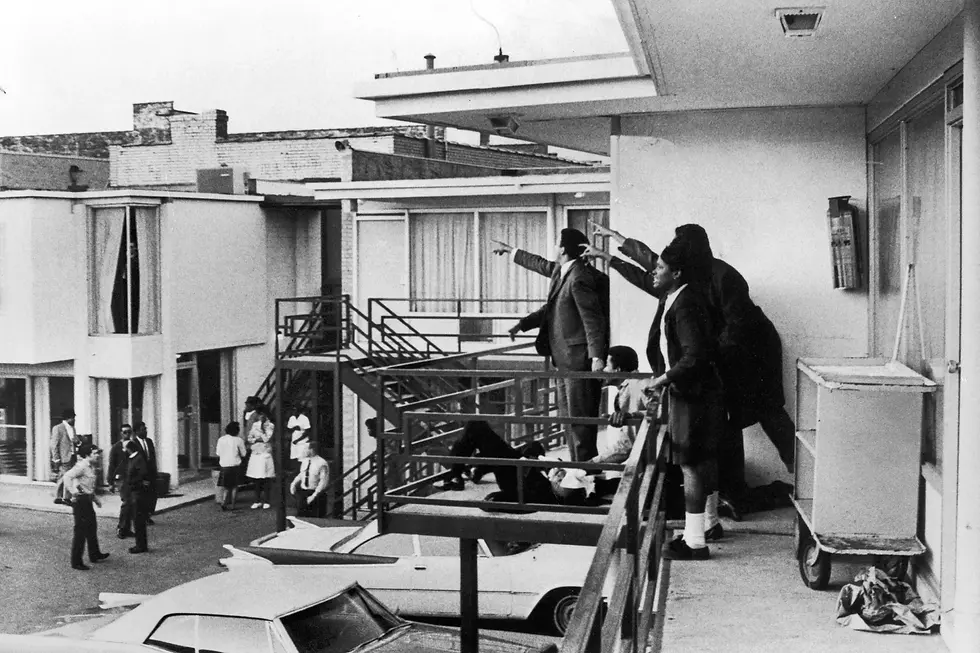
The Lorraine Motel is pictured here.
Works Cited
Andrade, Natan Penner. "The Death of a Dream: An Evaluation of the Conspiracy Theories Surrounding the Assassination of Dr. Martin Luther King Jr." ResearchGate, Apr. 2021, doi.org/10.13140/RG.2.2.16986.06082.
"Beyond Conspiracy: Martin Luther King Jr. & the Black Undercover Spy." SPYSCAPE, spyscape.com/article/beyond-conspiracy-martin-luther-king-jr-the-black-undercover-spy.
Estrada, Andrea. "'Intelligence Plus Character.'" The Current, 16 Jan. 2021, news.ucsb.edu/2021/020151/intelligence-plus-character.
Fink, Lisa. "The Powerful Words of Dr. Martin Luther King Jr." National Council of Teachers of English, 9 Jan. 2022, ncte.org/blog/2022/01/words-of-martin-luther-king-jr/.
King, Martin Luther, III, and Bernice A. King. "Statement on the Release of Dr. Martin Luther King Jr.'s Assassination Files." The King Center, 21 July 2025, thekingcenter.org/statement-from-dr-king-and-mlk-iii/.
Stanford University. "'The Purpose of Education.'" The Martin Luther King, Jr., Research and Education Institute, 3 May 2017, kinginstitute.stanford.edu/king-papers/documents/purpose-education.
United States, Department of Justice, Civil Rights Division. "Overview of Investigation of Allegations Regarding the Assassination of Dr. Martin Luther King Jr." Justice.gov, www.justice.gov/crt/overview-investigation-allegations-regarding-assassination-dr-martin-luther-king-jr.
United States, House Select Committee on Assassinations. "Findings on MLK Assassination." National Archives, www.archives.gov/research/jfk/select-committee-report/part-2d.html.